Choosing the Right 3D Printing Technology for Your Defense Project: A Paradigm Manufacturing Guide

In the rapidly evolving world of defense and drone technology, additive manufacturing (AM)—commonly known as 3D printing—has become a game-changer. From rapid prototyping to the production of mission-critical components, the right 3D printing technology can dramatically impact your project’s success. At Paradigm Manufacturing, we help defense innovators navigate the complex landscape of AM technologies to deliver robust, compliant, and high-performance solutions. Here’s how to choose the best 3D printing technology for your defense project.
Why 3D Printing for Defense?
Defense projects demand speed, flexibility, and uncompromising quality. 3D printing enables:
Rapid prototyping and design iteration for UAVs, vehicles, and mission equipment
On-demand production of spare parts, reducing inventory and logistics burdens
Customization for mission-specific components and payloads
Lightweight, complex structures that enhance performance and survivability
Integration of advanced materials for durability, heat resistance, and strength
Comparing Key 3D Printing Technologies
Let’s break down the most relevant AM technologies for defense and drone applications, highlighting their strengths, limitations, and best-fit use cases.
1. Fused Deposition Modeling (FDM)
How it works: FDM extrudes thermoplastic filament layer by layer to build parts.
Strengths:
Cost-effective and accessible
Fast turnaround for prototypes and non-critical parts
Wide range of materials, including high-strength and carbon fiber-reinforced filaments
Limitations:
Lower resolution and surface finish
Mechanical properties can be anisotropic (weaker between layers)
Not ideal for high-stress or flight-critical components
Best for:
Field-deployable spare parts (e.g., handles, brackets, UAV airframe components)
Rapid prototyping and design validation
Non-critical drone and vehicle parts
Paradigm’s Capabilities:
We use both Elegoo and BigRep FDM printers, offering robust thermoplastics and carbon fiber filaments for defense-grade prototypes and functional parts.
2. Stereolithography (SLA) / Resin Printing
How it works: SLA uses a UV laser to cure liquid resin, producing high-resolution, smooth-surfaced parts.
Strengths:
Exceptional detail and surface finish
Fast iteration for design validation
Ideal for aerodynamic and fit-check prototypes
Limitations:
Limited mechanical strength and durability
Not suitable for load-bearing or high-stress applications
Best for:
Rapid prototyping of drone components and housings
Detailed models for aerodynamic testing
Fit and assembly checks before metal production
Paradigm’s Capabilities:
Our Elegoo resin printers deliver high-detail prototypes for defense R&D and design iteration.
3. HP Multi Jet Fusion (MJF)
How it works: MJF uses a fusing agent and heat to solidify powder layers, producing durable, precise polymer parts.
Strengths:
High-speed production for both prototypes and end-use parts
Excellent mechanical properties and repeatability
Suitable for low-to-mid volume production
Limitations:
Limited to certain polymers (e.g., PA12)
Equipment and material costs higher than FDM
Best for:
Durable drone airframes and internal structures
Custom payload mounts and sensor housings
Production-grade parts for field deployment
Paradigm’s Capabilities:
We offer HP MJF for defense projects requiring robust, repeatable, and production-quality polymer parts.
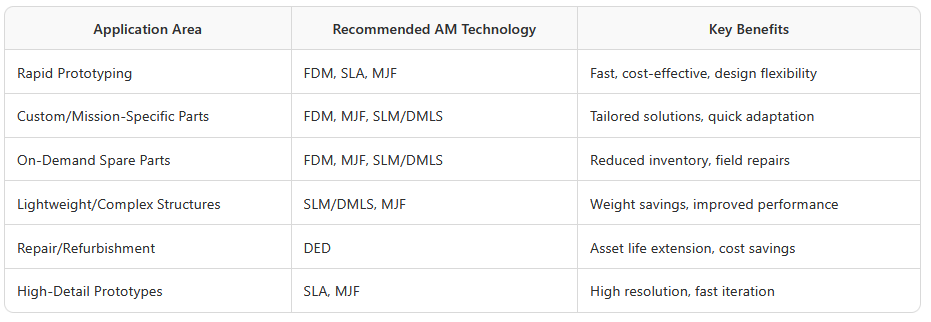
Matching Technology to Defense Applications
Material Considerations for Defense
Material selection is mission-critical. Defense applications often require:
High strength-to-weight ratios (e.g., carbon fiber, titanium alloys)
Thermal and chemical resistance (e.g., PA12, advanced polymers)
Corrosion and wear resistance for harsh environments
Certified, traceable materials to meet regulatory and quality standards
Paradigm Manufacturing offers a range of advanced materials, including PA12 nylon and carbon fiber filaments, to meet the demanding needs of defense and aerospace projects.
Compliance and Certification: Non-Negotiable for Defense
Defense projects must adhere to strict regulatory and quality standards, including:
AS9100 and ISO 9001 for quality management
ITAR for export control of defense articles and technical data
CMMC and NIST SP 800-171 for cybersecurity
Material Test Reports (MTRs) and Certificates of Conformance (CoC) for traceability and documentation
Paradigm’s team of AutoDesk-certified engineers ensures your project meets all relevant compliance and documentation requirements.
Cost and ROI: Making the Right Investment
FDM and MJF are cost-effective for prototyping, low-volume, and non-critical parts.
SLM/DMLS and DED justify their higher costs for high-value, complex, or mission-critical metal components.
AM technologies reduce lead times, inventory, and logistics costs, delivering strong ROI for low-volume, high-complexity, or time-sensitive defense applications.
Conclusion: Your Partner in Defense Innovation
Choosing the right 3D printing technology is essential for mission success in defense and drone projects. At Paradigm Manufacturing, we combine advanced AM technologies, a wide material portfolio, and deep engineering expertise to deliver solutions that meet the highest standards of performance, compliance, and reliability.Ready to accelerate your defense project? Contact Paradigm Manufacturing to consult with our certified experts and discover the best AM solution for your mission.
Paradigm Manufacturing: Shaping the Future of Defense, One Layer at a Time.
Choosing the Right 3D Printing Technology for Your Defense Project: A Paradigm Manufacturing Guide


